


Today, we'll travel the world to find out the top 8 largest shopping center / mall on earth, here you'll only see the largest ones, not the most popular, the ones that you've been there for this last years of your life, lol. They're springing up all over Asia, but will they last? Heading out to the mall – isn't that yesterday's way to shop? Not in Asia, where land is cheap and labor costs are low. A building boom has enormous shopping malls popping up in China, Malaysia, and the Philippines, with India expected to jump into the fold soon. While many traditional malls in North America are getting squeezed by a big-box era that includes the likes of Wal-Mart stores, Best Buy, and Target in nearly every county, Asia's rapidly growing economy has spawned a new wave of consumers looking for places to shop and play. Most of them are quite ritzy, too. A pair of Chinese malls that rank as the world's two largest – the South China Mall in Dongguan and Golden Resources Mall in Beijing – include features like wind mills and kids' theme parks. Golden Resources Mall is surrounded by newly built apartments and office buildings.
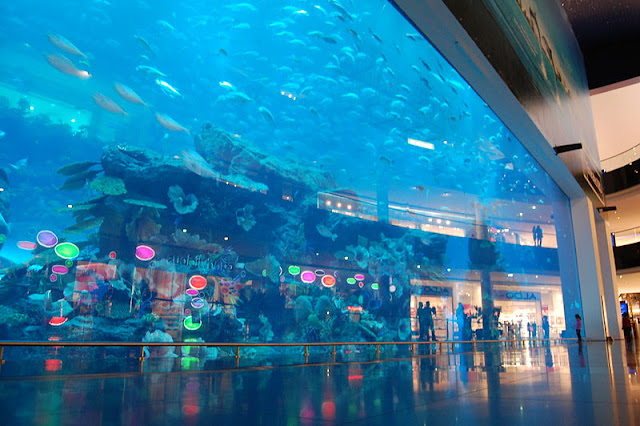
 The Dubai Mall is the world's largest shopping mall based on total area and sixth largest by gross leasable area. Located in Dubai, United Arab Emirates, it is part of the 20-billion-dollar Burj Khalifa complex, and includes 1,200 shops. Access to the mall is provided via Doha Street, rebuilt as a double-decker road in April 2009. Twice delayed, Dubai Mall opened on November 4, 2008, with about 600 retailers, marking the world's largest-ever mall opening in retail history.
However it is not the largest in gross leasable space, and is surpassed in that category by several malls including the South China Mall, which is the world's largest, Golden Resources Mall, SM City North Edsa, and SM Mall of Asia. The Dubai Mall has recorded a visitor turn-out of more than 60,000 tickets sold for the Dubai Aquarium and Discovery Centre in the first five days, following its opening. The Dubai Mall hosted over 37 million visitors in 2009, and attracts more than 750,000 visitors every week. while in 2010 it hosted 47 million, and saw footfall increase by around 27 percent over 2009, despite the economic crisis.
 SM City North EDSA is the largest mall in the Philippines, and the world’s third biggest in terms of leasable area (482,878 square meters). It is operated by SM Prime Holdings, a local holding company in the Philippines, the biggest retail and mall operator in Southeast Asia. Located at the intersection of North and Epifanio Delos Santos avenues in Quezon City, SM City North Edsa opened on November 25, 1985. The original concept offered a variety of tenants and flagship stores (i.e., department store, supermarket, bowling area, a foodcourt, and cinemas). The mall's redevelopment began with the opening of The Block in July 2006, and went into high gear with the launching of newly modernized Annex in December 2008, and the Skygarden in May 2009. The Car Park Plaza was also transformed into a lifestyle center on the same year. SM City North Edsa continues to be a work in progress with the ongoing renovation of the City Center and the development of the North Link. Back in 1985, it was the principal and only mall of its kind in the Philippines with a gross floor area of 120,000 sq m. It was constructed at a very challenging period in the Philippines' political history.
New South China Mall in Dongguan, China is the largest mall in the world based on gross leasable area, and ranked second in total area to the Dubai Mall. However, it is largely vacant. Unlike other "dead malls", which have been characterized by the departure of tenants, the New South China Mall has been 99% vacant since its 2005 opening as very few merchants have ever signed up.
Dongguan, with a population in excess of 10 million, is located in southern China's Guangdong province, east of the province's largest city, Guangzhou. The mall was built on land formerly used for farming, in the Wanjiang District of the city. The project was spearheaded by Hu Guirong (Alex Hu), who became a billionaire in the instant noodle industry.
 The mall contains sufficient space for as many as 2,350 stores in approximately 659,612 square metres (7,100,000 sq ft) of leasable space and 892,000 square metres (9,600,000 sq ft) of total area.
The mall has seven zones modeled on international cities, nations and regions, including Amsterdam, Paris, Rome, Venice, Egypt, the Caribbean, and California. Features include an 25 metres (82 ft) replica of the Arc de Triomphe, a replica of Venice's St Mark's bell tower, a 2.1 kilometres (1.3 mi) canal with gondolas, and a 553-meter indoor-outdoor roller coaster.
Since its opening in 2005, the mall has suffered from a severe lack of occupants. Much of the retail space has remained empty, with over 99% of the stores vacant. The only occupied areas of the mall are near the entrance where several Western fast food chains are located and a parking structure repurposed as a kart racing track. A planned Shangri-La Hotel has not been constructed.
 There are many flaws to the mall's location. The mall is located in the suburbs of Dongguan, where it is practically accessible only by car or bus, rendering it unreachable to a large percentage of the public. Dongguan does not have an airport, nor are there highways adjacent to the mall's location.
Originally called "South China Mall", the center was redubbed as "New South China Mall, Living City" in September 2007.
The mall was formerly owned by Dongguan Sanyuan Yinghui Investment & Development, Hu Guirong's company, but a controlling interest in the mall has been sold to the Founders Group, a division of Beijing University.
Academy Award-nominated documentary filmmaker Sam Green made a short film about the South China Mall called "Utopia Part 3: the World's Largest Shopping Mall." The film premiered at the 2009 Sundance Film Festival and was broadcast on PBS's documentary series POV.

West Edmonton Mall (WEM), located in Edmonton, Alberta, Canada, is the largest shopping mall in North America and the fifth[1] largest in the world. The mall was founded by the Ghermezian brothers, who emigrated from Iran in 1959. It was the world's largest mall until 2004.
 West Edmonton Mall covers a gross area of about 570,000 m2 (well over 6 million sq ft). There are over 800 stores and services and parking for more than 20,000 vehicles. More than 23,000 people are employed at the property. The mall receives 28.2 million visitors per year; it also attracts between 60,000 and 150,000 shoppers daily, depending on the day and season. The mall was valued at C$926 million in January 2007.
The Dubai Mall
 The Dubai Mall is the world's largest shopping mall based on total area and sixth largest by gross leasable area. Located in Dubai, United Arab Emirates, it is part of the 20-billion-dollar Burj Khalifa complex, and includes 1,200 shops. Access to the mall is provided via Doha Street, rebuilt as a double-decker road in April 2009. Twice delayed, Dubai Mall opened on November 4, 2008, with about 600 retailers, marking the world's largest-ever mall opening in retail history.
 However it is not the largest in gross leasable space, and is surpassed in that category by several malls including the South China Mall, which is the world's largest, Golden Resources Mall, SM City North Edsa, and SM Mall of Asia. The Dubai Mall has recorded a visitor turn-out of more than 60,000 tickets sold for the Dubai Aquarium and Discovery Centre in the first five days, following its opening. The Dubai Mall hosted over 37 million visitors in 2009, and attracts more than 750,000 visitors every week. while in 2010 it hosted 47 million, and saw footfall increase by around 27 percent over 2009, despite the economic crisis.

SM City North EDSA

New South China Mall
New South China Mall in Dongguan, China is the largest mall in the world based on gross leasable area, and ranked second in total area to the Dubai Mall. However, it is largely vacant. Unlike other "dead malls", which have been characterized by the departure of tenants, the New South China Mall has been 99% vacant since its 2005 opening as very few merchants have ever signed up.
Dongguan, with a population in excess of 10 million, is located in southern China's Guangdong province, east of the province's largest city, Guangzhou. The mall was built on land formerly used for farming, in the Wanjiang District of the city. The project was spearheaded by Hu Guirong (Alex Hu), who became a billionaire in the instant noodle industry.

The mall has seven zones modeled on international cities, nations and regions, including Amsterdam, Paris, Rome, Venice, Egypt, the Caribbean, and California. Features include an 25 metres (82 ft) replica of the Arc de Triomphe, a replica of Venice's St Mark's bell tower, a 2.1 kilometres (1.3 mi) canal with gondolas, and a 553-meter indoor-outdoor roller coaster.
Since its opening in 2005, the mall has suffered from a severe lack of occupants. Much of the retail space has remained empty, with over 99% of the stores vacant. The only occupied areas of the mall are near the entrance where several Western fast food chains are located and a parking structure repurposed as a kart racing track. A planned Shangri-La Hotel has not been constructed.

Originally called "South China Mall", the center was redubbed as "New South China Mall, Living City" in September 2007.
The mall was formerly owned by Dongguan Sanyuan Yinghui Investment & Development, Hu Guirong's company, but a controlling interest in the mall has been sold to the Founders Group, a division of Beijing University.
Academy Award-nominated documentary filmmaker Sam Green made a short film about the South China Mall called "Utopia Part 3: the World's Largest Shopping Mall." The film premiered at the 2009 Sundance Film Festival and was broadcast on PBS's documentary series POV.
West Edmonton Mall (WEM)

West Edmonton Mall (WEM), located in Edmonton, Alberta, Canada, is the largest shopping mall in North America and the fifth[1] largest in the world. The mall was founded by the Ghermezian brothers, who emigrated from Iran in 1959. It was the world's largest mall until 2004.


 Posts
Posts

